

A standing desk, like the popular Fully Jarvis, is a fantastic addition to any modern workspace, promoting better posture and increased activity. However, like any piece of sophisticated equipment, it can sometimes experience glitches. Whether it’s displaying an error code, becoming unresponsive, or simply not moving as it should, a simple reset can often resolve the issue and restore your desk to perfect working order.

This guide on how to reset fully desk is designed to walk you through the process, ensuring you can troubleshoot and fix common problems without hassle. Following these instructions will help you recalibrate your desk, clear out any electronic cobwebs, and get back to your productive, ergonomic workflow. This process is straightforward and typically takes only a few minutes to complete, saving you time and potential frustration.
Needed Materials
To complete this process, you will need the following materials:
- A Screwdriver (Size May Vary Depending on Desk Model)
- Rubbing Alcohol or Electronic Cleaner
- Cotton Swabs or a Soft Cloth
- Optional: Compressed Air Canister for Deeper Cleaning
8 Step-by-step Guidelines on How to Reset Fully Desk
Step 1: Clear the Desk and Surrounding Area
Before you begin the reset process, it is crucial to prepare your workspace to ensure both your safety and the protection of your equipment. Start by removing all items from the surface of your desk. This includes your computer monitors, laptop, keyboard, mouse, papers, and any personal items. A clear surface prevents anything from falling and breaking as the desk moves to its lowest position during the reset. It also removes any potential obstructions that could interfere with the calibration process, ensuring the desk can move freely without encountering resistance.
Once the desktop is clear, take a moment to inspect the area underneath and around the desk. Ensure there are no chairs, filing cabinets, wastebaskets, or other objects that could block the desk’s path as it lowers. The reset procedure will bring the desk down to its absolute minimum height, which might be lower than you typically use. Clearing this space is a critical safety measure that prevents the desk’s legs from colliding with an object, which could damage the motor, the frame, or the object itself. A clear path is essential for a smooth and successful reset.

Step 2: Unplug All Cables from the Control Box
With the desk area cleared, the next step is to perform a power cycle. Locate the control box, which is the electronic brain of your standing desk. It’s usually a black or grey rectangular box mounted to the underside of the desktop, often near the center. You will see several cables connected to it, including the power cord and the cables that lead to each of the desk’s lifting columns (legs). Carefully unplug every single cable from this control box. It is important to disconnect everything, not just the main power cord from the wall outlet.
Disconnecting all cables ensures that any residual electrical charge in the system’s capacitors is fully discharged. This process, often called a “hard reset,” effectively clears the internal memory of the control box, erasing any error states or software glitches that may have been causing the problem. Leave all cables unplugged for at least 60 seconds to a few minutes to guarantee a complete power drain. This waiting period is not just a suggestion; it’s a necessary step to allow the internal components to fully reset their state, much like restarting a computer to resolve performance issues.
Step 3: Reconnect All Cables to the Control Box
After waiting for a sufficient amount of time, you can begin reconnecting the cables to the control box. It’s important to do this carefully and methodically to ensure a secure and correct connection. Start with the motor cables that run to each leg of the desk. Plug them firmly into their designated ports on the control box. You should feel a slight click as they lock into place. Make sure these connections are snug, as a loose motor cable is a common cause of height adjustment failures and error codes.

Next, reconnect the cable for the handset, which is the keypad you use to control the desk’s height. Finally, plug the main power cord back into the control box. Once all connections to the control box are secure, you can plug the main power cord back into a working wall outlet. At this point, you may see the handset display light up, often showing “RST” or a series of dashes. This is a normal and expected sign that the desk has entered reset mode and is ready for the final calibration steps.
Step 4: Press and Hold the Down Arrow Button
Now that the desk is powered back on and in reset mode, the final calibration step is to synchronize the legs. To do this, press and hold the “Down” arrow button on your handset. Do not release the button at any point during this step. As you hold the button, the desk will begin to lower slowly. It may move in small, stuttering increments, or one leg might move slightly before the other. This is a normal part of the recalibration process as the system finds the base height for each lifting column.

Continue to hold the “Down” button without interruption. The desk will proceed to its lowest possible physical position. Once it reaches the bottom, it may stop for a moment and then make a final, small movement, either slightly down and then back up, or it will simply click. You must keep holding the “Down” button throughout this entire sequence. Releasing the button too early will interrupt the reset and require you to start the process over again. The desk is only fully reset once it has completed this final movement and has come to a complete stop at its lowest height.
Step 5: Release the Button After the Final Movement
The key to a successful reset is knowing exactly when to release the “Down” arrow button. You must continue to hold it down until the desk has completely finished its reset cycle. After reaching its lowest point, the desk will make a final subtle adjustment—it will either dip down a fraction of an inch and then rise back up a tiny bit, or you will hear an audible click from the control box. This final action signals that the internal controller has successfully recorded the minimum height and synchronized the motors in both legs.
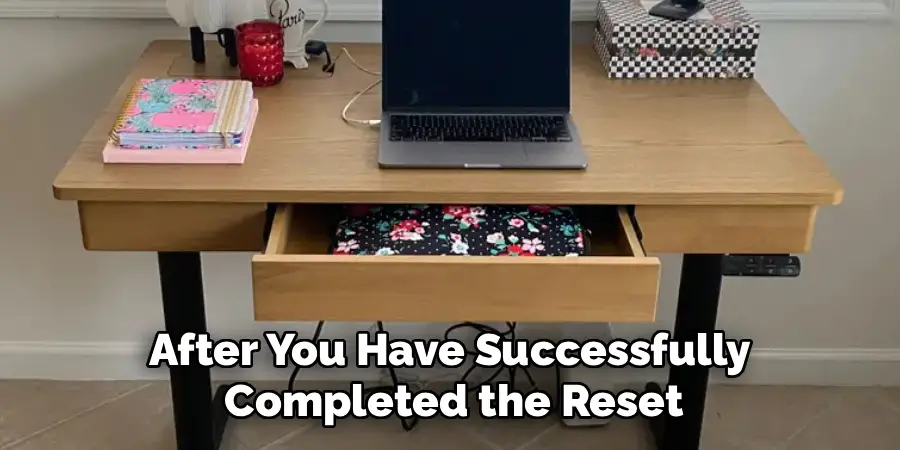
Once you observe this final movement or hear the click, you can release the “Down” arrow button. The handset display should now show a numerical height reading instead of the “RST” message. To confirm that the reset was successful, try raising the desk by pressing the “Up” arrow. It should move smoothly and evenly. If the desk operates normally, you have successfully reset your Fully desk. You can now use all its functions, including any saved memory presets, which may need to be reprogrammed after the reset.
Step 6: Test the Desk’s Full Range of Motion
A successful reset should restore complete functionality. Before placing your equipment back on the surface, it is wise to test the desk’s full range of motion to ensure everything is working correctly. Press and hold the “Up” arrow button and allow the desk to rise to its maximum height. Pay close attention to the movement. The desk should travel smoothly and quietly, without any jarring, stuttering, or unusual noises. Both legs should move in perfect unison.

After reaching the top, press and hold the “Down” arrow button to bring it all the way back down to its minimum height. Again, watch for smooth, synchronized movement. Running the desk through one full up-and-down cycle confirms that the motors are aligned and the controller is functioning properly across the entire operational range. If the desk moves as expected, the reset is complete and successful. You can now confidently return your computer and other items to the desktop. If it still shows an error or moves unevenly, you may need to repeat the reset process, ensuring each step is followed precisely.
Step 7: Reprogram Your Memory Presets
One consequence of a full reset is that it erases any custom memory presets you may have saved for your preferred sitting and standing heights. After you have confirmed the desk is moving correctly, the final step is to reprogram these settings to restore your personalized workflow. To do this, use the up and down arrows to move the desk to your desired sitting height. Take your time to find the exact ergonomic position that is most comfortable for you.
Once you have found the perfect height, press the “M” (for memory) button on your handset, followed by one of the numbered buttons (e.g., “1”). The handset display will likely flash or make a sound to confirm that the position has been saved to that preset. Repeat this process for your preferred standing height, saving it to a different numbered button (e.g., “2”). You can do this for any other heights you use regularly. Once reprogrammed, test each preset to ensure it takes the desk to the correct saved height automatically.

Following these steps on how to reset fully desk memory presets will ensure that your desk is always at the perfect height for you, without having to manually adjust it every time. This feature can be particularly useful for individuals who use their standing desk for different activities throughout the day (e.g., working, reading, exercising). With the touch of a button, they can easily switch between their preferred heights for each activity without having to remember or manually adjust the desk.
Do You Need To Use Professionals?
For a standard reset procedure, professional help is almost never necessary. The process is designed to be user-friendly and can be performed by anyone with basic instructions. The steps do not require any specialized tools or technical expertise. You should only consider contacting a professional or the manufacturer’s customer support if the reset procedure fails to resolve the issue after several attempts.
If the desk remains unresponsive, shows a persistent error code that the reset won’t clear, or if you suspect a hardware failure (like a damaged motor or control box), then expert assistance would be the next logical step.
Frequently Asked Questions
Q1: Why Does My Fully Desk Need to Be Reset?
A1: Your desk may need a reset for several reasons. Often, it’s due to a minor power surge or interruption that can confuse the electronic controller. Other times, an error can occur if the desk’s movement is obstructed or if the legs become slightly out of sync over time. Displaying an error code like “RST” or “ASR” is the most common indicator. A reset effectively reboots the desk’s internal computer, clears any stored errors, and recalibrates the leg heights to ensure they move in unison, resolving most operational glitches.
Q2: What Should I Do if the Reset Doesn’t Fix the Problem?
A2: If you have performed the reset process two or three times and the desk still isn’t functioning correctly, the issue may be more than a simple glitch. First, carefully re-check all cable connections to ensure they are secure. If the connections are solid and the problem persists, it could indicate a faulty component. The most common points of failure are the control box, one of the motors in the legs, or the handset itself. At this point, it is best to contact the manufacturer’s customer support for further diagnostic assistance or to inquire about replacement parts.
Q3: Will Resetting My Desk Erase My Saved Height Presets?
A3: Yes, a full reset of your Fully desk will wipe any saved memory positions for your sitting and standing heights. This is because the process clears the internal memory of the control box to remove any errors, and your presets are stored in that memory. After you have successfully completed the reset and confirmed the desk is moving correctly, you will need to take a moment to reprogram your preferred heights. This is a simple process of moving the desk to the desired position and using the memory function on your handset to save it.
Conclusion
Resetting your Fully desk is a simple yet powerful troubleshooting technique that can solve the majority of common issues, from error codes to uneven movement. By following the step-by-step guidelines on how to reset fully desk outlined above—clearing the area, power-cycling the control box, and performing the calibration by holding the down button—you can restore your desk’s functionality in just a few minutes.
This straightforward process empowers you to maintain your own equipment, ensuring your investment continues to support a healthy and productive work routine. With these instructions, you are well-equipped to handle any minor glitches and keep your standing desk operating smoothly for years to come.
