

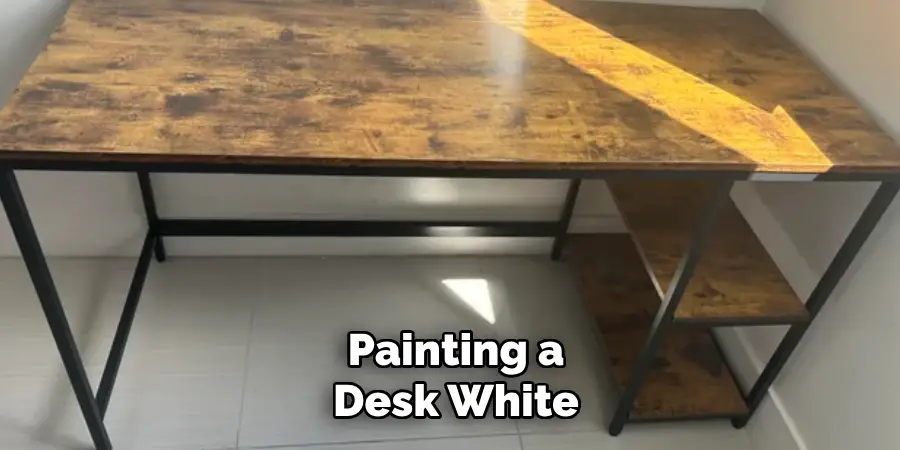
Painting a desk white is a simple yet effective way to give it a fresh and modern look. Whether you’re revitalizing an old piece or customizing a new one, the process can transform your workspace into a clean and bright area. With the right tools and preparation, you can achieve a professional-quality finish at home.

This guide on how to paint desk white will walk you through each step, ensuring that your desk is painted beautifully and lasts for years to come.
Why Paint a Desk White?
White is a versatile and timeless color that can brighten up any room. Painting your desk white gives it a clean, crisp look while also making it stand out as a statement piece. Additionally, painting furniture is an affordable way to update the look of your space without having to replace all of your furniture.
It’s also a great way to personalize your desk and make it unique. You can add your own touch by choosing different shades of white or adding designs and patterns.
Materials Needed
A Desk (Wood or Laminate):
The first step in painting a desk white is to ensure that you have the right type of desk for this project. You can use either wood or laminate desks, but keep in mind that each material will require different preparation and painting techniques.
Sandpaper:
You will need sandpaper to smooth out any rough surfaces or imperfections on your desk. This is especially important if you are painting a wooden desk, as it helps the paint adhere better and creates a smoother finish.
Primer:
Using a primer before painting is crucial in achieving a professional-looking finish. It helps the paint stick better to the surface and also ensures that the final color appears vibrant and even.
White Paint (Latex or Oil-based):
When choosing white paint for your desk, you can either opt for latex or oil-based paint. Latex paint is water-based and has a quicker drying time, while oil-based paint provides a more durable finish. Consider the use and location of your desk to determine which type of paint is more suitable for you.
Paintbrushes or Rollers:
To apply the paint, you will need either a paintbrush or a roller. For smaller desks with intricate details, a brush might be more useful. However, for larger surfaces, a roller can help achieve an even coat faster.
Drop Cloth or Newspaper:
It’s important to protect your work area from any spills or drips while painting. A drop cloth or old newspapers can be used to cover the floor and surrounding areas.
8 Step-by-step Guidelines on How to Paint Desk White
Step 1: Prepare Your Workspace
Before you begin painting, it’s essential to set up your workspace properly. Choose a well-ventilated area with good lighting to ensure you can see your progress clearly and allow the paint to dry efficiently. Lay down a drop cloth or newspaper to protect the floor from drips and spills. Remove any nearby items that could be accidentally splattered with paint.
If your desk has drawers or hardware, such as handles or knobs, remove them carefully and set them aside. This preparation will create a clean and organized environment, making the painting process smoother and more efficient.
Step 2: Clean and Sand Your Desk
Ensure that your desk is clean and free of dust, dirt, or any debris before painting. Use a damp cloth to wipe down the surface thoroughly. For wooden desks, use sandpaper to smooth out any rough spots or imperfections. Remember to always sand in the direction of the wood grain for a smoother finish.

You can also use sandpaper to lightly roughen up the surface of a laminate desk. This will help the primer adhere better and prevent any peeling or chipping of the paint in the future.
Step 3: Apply Primer
Priming your desk is an essential step to ensure that your final coat of white paint appears bright and even. Using a high-quality primer, apply a thin coat on your desk with either a paintbrush or roller. You can also choose a tinted primer for better coverage if you’re painting over dark-colored wood.
Allow the primer to dry completely before moving on to the next step.
Step 4: Paint Your Desk White
Once the primer has dried, it’s time to paint your desk white. Start by pouring the paint into a tray and, using a brush or roller, apply an even coat on the surface of your desk. Again, remember to always follow the direction of the wood grain for wooden desks.
For laminate desks, use a smooth and consistent motion while painting to prevent any streaks or bubbles. If necessary, you can apply multiple coats of paint for better coverage.
Step 5: Let It Dry
After applying the white paint, allow the desk to dry completely before proceeding to the next steps. Drying times can vary depending on the type of paint used and environmental conditions, such as humidity and temperature. Generally, latex paint dries faster, taking about 1-2 hours to feel dry to the touch, but it’s best to wait at least 4-6 hours before applying additional coats or handling.
For oil-based paint, allow a minimum of 24 hours to ensure proper drying. Patience during this step is crucial to avoid smudges, uneven surfaces, or damage to the fresh paint, ensuring a smooth and professional finish.
Step 6: Optional – Add a Second Coat
Inspect your desk after the first coat of paint has dried. If you notice any visible streaks or uneven areas, lightly sand them with fine-grit sandpaper and apply a second coat of white paint. This step is optional but can help achieve a more polished and even finish.
But be cautious not to apply too many coats of paint, as it can result in a thick and uneven surface.
Step 7: Reattach Drawers and Hardware
Once the paint has dried completely and you are satisfied with the finish, it’s time to reattach the drawers and any hardware you had removed earlier. Carefully reinstall handles, knobs, or other decorative elements onto the drawers. Ensure they are securely fastened and aligned properly for a polished and functional look.

Then, slide the drawers back into place gently to avoid scratching your freshly painted surfaces. Taking your time with this step will ensure that your desk is ready for use and its new look is complete.
Step 8: Clean Up and Enjoy Your Newly Painted White Desk
After completing the painting process, take a moment to clean up your workspace. Properly dispose of used drop cloths, newspaper, and any other protective materials you use. Wash your brushes and rollers thoroughly with water for latex paint or with mineral spirits for oil-based paint, and store them properly for future projects.
Following these simple guidelines on how to paint desk white can help you achieve a beautiful and professional-looking white desk, giving your workspace a fresh and clean aesthetic. Enjoy your newly painted desk and let it inspire you to create and work efficiently at your new, personalized workstation! So don’t be afraid to get creative with different painting techniques or add some personal touches like stencils or decals for a unique touch. The possibilities are endless when it comes to transforming your desk into a functional and stylish piece of furniture. Happy painting!
Frequently Asked Questions
Q: Do I Need to Use a Primer When Painting My Desk White?
A: Yes, using a primer is crucial for achieving an even and bright white finish on your desk. It also helps the paint adhere better and prevents any chipping or peeling in the future. The type of primer you use may vary depending on the material of your desk.
Q: How Many Coats of Paint Do I Need to Use?
A: It depends on the coverage and finish you want. Generally, one or two coats of white paint are enough to achieve a clean and polished look, but you can add additional coats if needed. Remember not to apply too many coats as it can result in a thick and uneven surface.
Q: Can I Paint Over a Laminate Desk?
A: Yes, but make sure to properly prepare the surface by cleaning and lightly sanding it before applying a primer for better adhesion. Also, choose a high-quality paint suitable for laminate surfaces for the best results.
Q: How Long Should I Wait Between Coats of Paint?
A: It’s best to wait at least 4-6 hours before applying additional coats or handling a freshly painted desk. However, drying times may vary depending on the type of paint used and environmental conditions, so it’s always best to follow the manufacturer’s instructions for optimal results.

Conclusion
Painting your desk white can be an easy and rewarding DIY project that transforms an old or outdated piece of furniture into something fresh and stylish. By following the proper steps on how to paint desk white—cleaning, sanding, priming, painting, and finishing—you can achieve a professional-looking result that enhances your workspace’s aesthetic.
Taking the time to prepare and apply the materials carefully ensures a durable and polished finish. Whether you’re upgrading your home office or creating a study area, your newly painted white desk is sure to inspire creativity and productivity. Enjoy the sense of accomplishment and the new life you’ve brought to your furniture!
