

A rocking recliner offers the best of both worlds: the soothing motion of a rocker and the deep comfort of a recliner. However, there are times when you might want the chair to stay put.
Whether you need a stable seat for getting up, want to prevent accidental movement, or simply prefer a stationary chair for certain activities, locking the rocking mechanism is a practical solution. Understanding how to secure your recliner not only enhances its versatility but also adds a layer of safety and stability to your favorite piece of furniture.
This guide on how to lock a rocking recliner will walk you through everything you need to know to safely and effectively lock your rocking recliner.

What Will You Need?
Before you begin, gather a few basic items. This process is straightforward and doesn’t require specialized tools.
- Wooden wedges or blocks (two to four, depending on the method)
- Measuring tape
- Screws (if you want a more permanent solution)
- A drill with appropriate bits (for the screw method)
- A flashlight
- Gloves (optional, for safety)
10 Easy Steps on How to Lock a Rocking Recliner
Follow these detailed steps to securely lock your rocking recliner. This method primarily uses wooden wedges, which is a non-permanent and effective solution.
Step 1: Prepare Your Workspace
First, ensure you have enough room to work around the recliner. Move any nearby furniture, rugs, or obstacles out of the way. You will need to tilt the chair forward to access its underside, so having a clear, well-lit space is crucial for safety and ease of work. It’s also a good idea to lay down a blanket or towel to protect your floor and the chair’s upholstery while you work. Having all your tools within reach will make the process smoother and prevent you from having to get up and search for items mid-task.
Step 2: Carefully Tilt the Recliner Forward
Stand in front of the recliner and grab it firmly by the armrests. Slowly and carefully tilt the chair forward until it rests on the front of its arms and the top of its backrest. This position will expose the entire base and the rocking mechanism underneath. Be mindful of the chair’s weight; if it’s too heavy, ask someone to help you. Avoid dropping or slamming the chair down, as this could damage the frame or the mechanism. Once tilted, check that it is stable before you proceed to work underneath it.

Step 3: Identify the Rocking Mechanism
Use your flashlight to look at the underside of the chair. You will see a complex-looking metal frame. The part you need to focus on is the base. You’ll notice two main sections: a stationary base that sits on the floor and an upper frame that the chair itself is attached to. The rocking motion happens because the upper frame moves back and forth on a set of arched rails or springs connected to the stationary base. Your goal is to block this movement between these two parts.
Step 4: Measure the Gap for the Wedges
Observe the space between the stationary base and the moving upper frame. This gap is where you will insert the wooden wedges to stop the rocking motion. Use your measuring tape to determine the height, width, and depth of this gap. Take measurements at both the front and back of the mechanism, as the gap size might vary. Accurate measurements are key to getting wedges that fit snugly and provide a secure lock without being too difficult to insert or remove. Write down these dimensions so you can prepare your wooden blocks accordingly.
Step 5: Prepare Your Wooden Wedges
Based on the measurements you took, prepare your wooden blocks or wedges. You can purchase pre-made wooden wedges from a hardware store, or you can cut your own from a piece of scrap wood. The ideal wedge should be slightly larger than the gap to ensure a tight fit. If you’re cutting your own, creating a slight taper on one end will make it easier to slide the wedge into place. Sand any rough edges to prevent them from splintering or damaging the chair’s mechanism. You will typically need two wedges—one for the front and one for the back—to stop the motion completely.

Step 6: Insert the First Wedge at the Rear
Start with the gap at the rear of the rocking mechanism (closer to the chair’s backrest). Take one of your wooden wedges and position it in the space between the stationary base and the upper moving part of the frame. Gently tap the wedge into place with a rubber mallet or the palm of your hand. Push it in until it’s firm and snug. The wedge should be tight enough to prevent any movement but not so tight that it strains the metal frame. This first wedge will eliminate most of the rocking motion.
Step 7: Insert the Second Wedge at the Front
Now, move to the front of the mechanism. Insert the second wooden wedge into the corresponding gap at the front. Just like with the rear wedge, slide it in firmly until it fits tightly. Having wedges at both the front and back creates a balanced stop, distributing the pressure evenly and ensuring the chair is completely immobilized. If the chair still has a slight wobble, you may need to adjust the wedges or use slightly larger ones for a tighter fit. Some recliner designs might even benefit from four smaller wedges placed at each corner of the mechanism.
Step 8: Test the Stability
With the wedges in place, it’s time to check your work. Carefully tilt the recliner back onto its base. Sit in the chair and try to rock it. It should feel solid and stationary. Lean back and forth and shift your weight to ensure there is no wobbling or creaking. If you notice any movement, you’ll need to tilt the chair forward again and adjust the wedges. They may need to be pushed in further or replaced with a better-fitting block. This step is critical for confirming that the lock is effective and safe before you begin using the chair regularly.
Step 9: Secure the Wedges (Optional Permanent Step)
If you are satisfied with the stability and want a more permanent solution, you can secure the wedges with screws. For this, you would drill a pilot hole through the wooden wedge and into a non-moving part of the wooden base frame of the chair. Be extremely careful not to drill into any metal mechanical parts. Then, drive a wood screw through the wedge into the frame. This will hold the block securely in place and prevent it from slipping out over time. This step is entirely optional and makes the modification much harder to reverse.

Step 10: Final Inspection and Cleanup
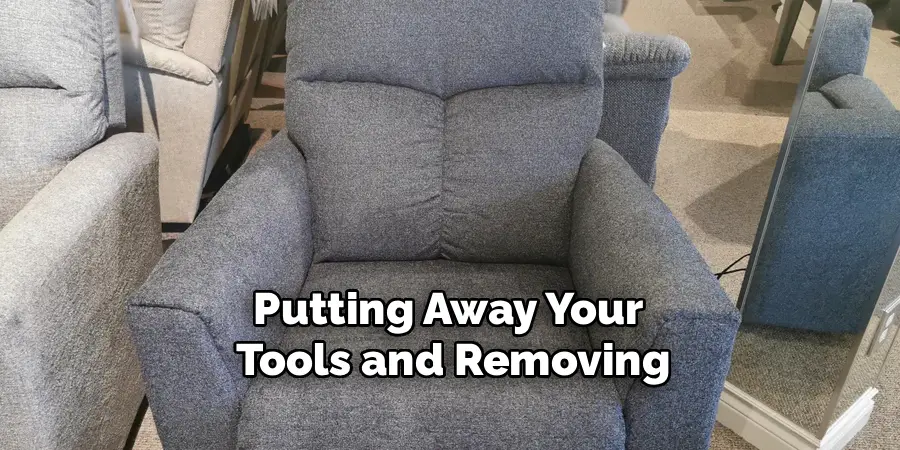
Once you are happy with the results, perform a final inspection. Make sure the chair sits level on the floor and that all parts of the recliner, including the footrest and reclining function, still work correctly. Locking the rocking mechanism should not interfere with the chair’s ability to recline. Finally, clean up your workspace by putting away your tools and removing the blanket from the floor. Your rocking recliner is now a stable, stationary chair, ready for you to enjoy.
5 Things You Should Avoid
When locking your recliner, avoid these common mistakes to prevent damage and ensure a successful outcome.
- Don’t Use Metal or Hard Plastic: Avoid using metal objects or very hard plastics as wedges. These materials can grind against the metal mechanism, causing damage, rust, or unwanted noise. Wood is the best choice as it’s firm enough to hold but soft enough not to damage the chair.
- Avoid Blocking the Reclining Mechanism: Be very careful to only block the rocking components at the base. Do not insert wedges or blocks near the reclining levers, bars, or scissor mechanisms, as this could prevent the chair from reclining properly and cause serious damage.
- Don’t Force a Wedge That Is Too Big: If a wedge is too large for the gap, don’t try to hammer it in with excessive force. This can strain the chair’s frame, bend metal parts, or crack the wood of the chair or the wedge itself. Always use a snug-fitting wedge.
- Don’t Skip the Testing Step: Never assume the chair is stable without testing it first. Always sit in the chair and check for wobbles after inserting the wedges. An improperly secured chair can be a safety hazard.
- Avoid Making Permanent Changes Unless Sure: Think twice before drilling screws to permanently fix the wedges. This action may void your chair’s warranty and make it difficult to restore the rocking function if you change your mind later.
Conclusion
How to lock a rocking recliner is a simple and effective way to add stability, safety, and versatility to your furniture.
By following the steps outlined in this guide, you can easily transform your chair to better suit your needs without causing any damage. Whether you’re looking for a more stable seat for daily activities or ensuring a safer environment for your family, this small modification can make a big difference.
Enjoy the comfort of your recliner, now with the added benefit of being exactly as you need it to be—rocking or stationary.
