

To make your cubicle cozy, swap harsh fluorescent lighting for a warm desk lamp, add a low-maintenance plant or two, display a few personal photos, and layer in soft textures like a lumbar cushion or small rug. Staying organized ties it all together — and most of this can be done for under $50.

Most people spend somewhere between 35 and 45 hours a week at their desk. That’s a significant portion of your waking life, yet the average office cubicle looks like it was designed to minimize personality rather than support it. Beige walls, flickering fluorescents, a chair that fits no one particularly well — it’s a setup that does the bare minimum.
Here’s what’s worth knowing: your physical environment has a measurable effect on how you think and feel at work. Research in environmental psychology suggests that personalized workspaces may improve worker satisfaction by up to 20 percent. Whether or not that number holds precisely across every context, the general finding is consistent — people tend to work better when their surroundings feel at least somewhat their own.
This guide on how to make your cubicle cozy walks you through seven practical steps to make your cubicle cozy without violating office policies, spending a lot of money, or turning your desk into a cluttered shrine. You’ll also find a budget-friendly section, a short list of common mistakes, answers to the questions people actually ask, and a clear sense of where to start.
Why Your Workspace Atmosphere Actually Matters?
Before getting into the steps, it’s worth spending a moment on the “why” — not because the reasoning is complicated, but because it tends to change how seriously people take the small stuff.

A cold, sterile desk quietly works against you. Visual clutter raises cortisol. Poor lighting strains your eyes and flattens your mood by mid-afternoon. Sitting in a chair that doesn’t fit your body creates physical tension that compounds over time. None of these things is dramatic on its own, but together they add up to a workday that feels harder than it needs to be.
On the flip side, a few well-chosen adjustments — warm light, something living on your desk, a cushion that actually supports your back — can shift the experience considerably. You’re not trying to replicate your living room. You’re just trying to make the space feel less anonymous.
7 Steps on How to Make Your Cubicle Cozy
Step 1: Replace Harsh Lighting with Something Warmer
Fluorescent overhead lighting is the single biggest contributor to eye fatigue in most offices. It’s bright, but it’s not the kind of bright that helps — it flattens everything and tends to make people look (and feel) slightly washed out by 3 p.m.
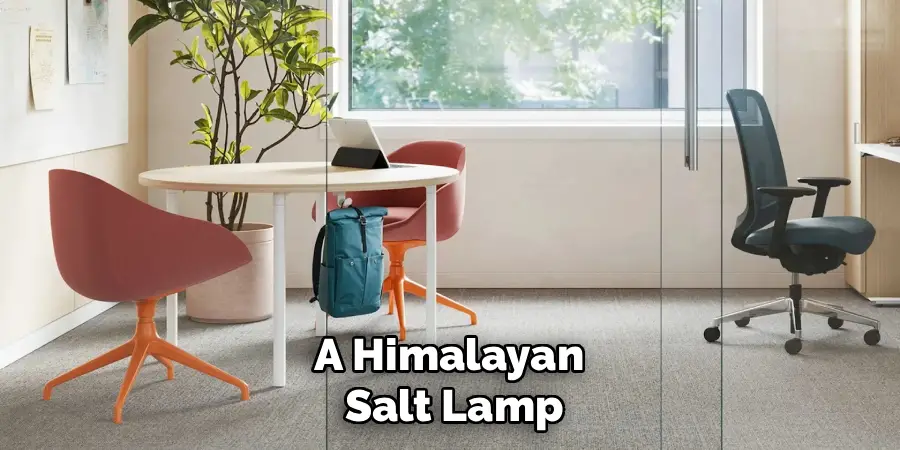
A small desk lamp with a warm-toned LED bulb makes a noticeable difference. Warm lighting — in the 2700K to 3000K color temperature range — mimics the quality of late-morning sunlight, which may help regulate your body’s natural energy rhythms. String lights draped along the top edge of your cubicle wall can add a softer ambient glow, and a Himalayan salt lamp, while perhaps more aesthetic than functional, creates a genuinely pleasant visual warmth in the corner of your space.
Check your office’s electrical policy before plugging in multiple devices. Most workplaces allow one or two small lamps without issue, but it’s worth confirming.
Step 2: Bring in a Plant or Two
There’s something about having something alive on your desk that changes the feel of a workspace. Even a single small plant breaks up the visual monotony of grey and beige surfaces.
For low-light office conditions, pothos, snake plants, and ZZ plants are among the most forgiving options — they tolerate fluorescent lighting, don’t need frequent watering, and are difficult to kill through mild neglect. A small succulent on your monitor stand or a trailing pothos on the top shelf of your cubicle wall both work well.
If your office has no natural light at all, a high-quality artificial plant still carries some of the psychological benefits of greenery. It sounds minor, but visual texture matters more than most people expect.
Step 3: Add Personal Photos and a Few Meaningful Objects
Blank cubicle walls are quietly demoralizing. A few personal photos — family, friends, a trip you took, a pet doing something absurd — remind you that your life extends well beyond your inbox.
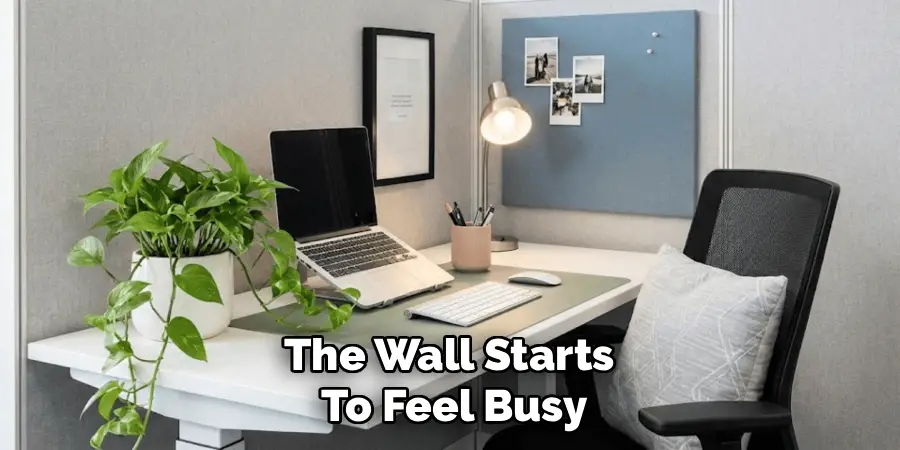
The key to making this look intentional rather than chaotic is consistency in framing. All black frames, or all natural wood, give a curated feel without requiring any design background. Three to five items are usually the right range. More than that, and the wall starts to feel busy; fewer, and it can still feel sparse.
A small piece of art, a postcard, or even a beautifully designed calendar can round out the display. These visual anchors give your eyes somewhere to rest when you look up from your screen, which happens more often than you’d think.
Step 4: Upgrade Your Chair Situation
Standard office chairs are rarely designed with any specific person in mind. They’re sized for a median that may not match you at all — too high, too flat, or lacking lumbar support entirely.
You may not be able to replace the chair. But you can improve it. A memory foam seat cushion addresses the most common complaint — hard, unsupportive seating — and a lumbar roll or wedge cushion helps maintain the natural curve of your lower back. Both are inexpensive and make a real difference over the course of a long day.
Draping a soft throw blanket over the back of your chair serves two purposes: it adds visual warmth, and offices are often over-air-conditioned in ways that a thermostat request won’t fix. Having a layer you can actually reach for is practical, not just cozy.
Step 5: Organize the Space So It Can Actually Breathe
A space can have all the right decorative elements and still feel stressful if the underlying structure is chaotic. Clutter competes for your attention in ways that are subtle but constant.
A matching set of desk organizers — pen holder, paper tray, cable management box — keeps the surface clear without requiring you to achieve some kind of minimalist ideal. The goal isn’t perfection; it’s functional calm. Cords tucked away, surfaces wiped down, supplies in a place you can find them.
Taking five minutes at the end of each workday to reset your desk is one of those habits that sounds unremarkable until you do it consistently. Coming in the next morning to a clear surface is a small thing that reliably improves how you start the day.
Step 6: Soften the Hard Surfaces with Textiles
Office environments lean heavily on hard, reflective materials — laminate, glass, metal, industrial carpet. Textiles push back against that.
A small rug under your desk gives your feet a warmer surface to rest on, particularly welcome if you tend to take your shoes off while working. Fabric-covered pinboards or soft acoustic panels on your cubicle walls add visual warmth and, usefully, help absorb ambient office noise — a genuinely practical benefit, not just an aesthetic one.
You don’t need to go overboard here. A rug and a cushion already shift the sensory experience meaningfully. The point is to introduce materials that feel different from the default.
Step 7: Use Scent Thoughtfully
Scent is more directly tied to mood and memory than most people consciously realize. A smell associated with relaxation or focus can shift your mental state faster than almost any visual change.
In shared offices, strong fragrances can be a real problem for colleagues, so a reed diffuser with a subtle scent — lavender, cedar, or something similarly understated — tends to stay within a socially acceptable range. A personal essential oil roll-on on your wrist is even more contained. If your workplace has a strict fragrance-free policy, a cup of aromatic herbal tea achieves something similar within your immediate space without affecting anyone around you.
Following these steps on how to make your cubicle cozy and comfortable, you can design a workspace that inspires productivity and creativity while also providing a sense of comfort and relaxation.
Budget-Friendly Ways to Cozy Up Your Cubicle
You don’t need to spend much. A favorite mug from your kitchen, a spare throw from your couch, and a plant from a grocery store already cover several of the steps above.
Thrift stores and discount shops are reliably good sources for picture frames, small decorative trays, and faux plants. Free printable art — landscapes, abstract designs, simple quotes — can be printed at the office on decent paper and framed for a few dollars. Repurposed glass jars make serviceable pen holders. Washi tape along the edge of your monitor or along the bottom of your cubicle wall adds color without any real commitment.
Most people can make meaningful improvements for well under $50. A warm LED desk lamp typically runs between $15 and $25; a lumbar cushion, around $20. Everything else can be sourced cheaply or pulled from home.
Common Mistakes to Avoid
The most common error is overdecorating. More items do not produce more coziness — past a certain point, they produce distraction. A few well-chosen things work better than a collection of things you like equally.

Avoid anything that emits strong fragrances, generates noise, or could raise a safety concern (blocking vents, using open flames, overloading power strips). Don’t bring in items that are likely to create friction with colleagues or violate visible company policy. And resist the impulse to treat decoration as a substitute for organization — a cluttered desk with nice objects on it is still a cluttered desk.
Frequently Asked Questions About Cozy Cubicles
How Can I Make My Cubicle Cozy Without Violating Office Rules?
Stick to functional upgrades that don’t create noise, strong smells, or fire hazards. An ergonomic cushion, a small plant, framed photos, and a desk lamp cover most of the high-impact changes and are unlikely to conflict with standard workplace policies. Check your employee handbook before bringing in any electrical devices.
What Are the Best Plants for a Windowless Office Cubicle?
Snake plants, ZZ plants, and pothos are the most practical choices — all three tolerate low light and infrequent watering. If there’s truly no light at all, a high-quality artificial plant provides the visual benefit without the maintenance.
How Much Should I Budget for Cubicle Decor?
Under $50 is very achievable if you repurpose items from home and shop selectively. Prioritize one or two high-impact purchases — typically a good lamp and a comfortable cushion — and source the rest from discount stores or around your house.
Final Thoughts on Transforming Your Workspace
Your cubicle doesn’t need to feel like a waiting room. A few deliberate changes — warmer light, something living on your desk, a surface that’s actually clear, a chair that supports your back — can shift the atmosphere from draining to genuinely comfortable.
Start with one step this week. Bring in the lamp, or the plant, or the throw blanket. Notice whether it changes how you feel sitting down in the morning. It likely will. From there, the rest of the list is just a series of small decisions that compound over time into a workspace you might actually look forward to being in. Thanks for reading this guide on how to make your cubicle cozy.
