

Most people think of sun damage as something that happens outdoors — at the beach, on a run, or driving with the window down. But if you spend the majority of your working day under fluorescent ceiling lights, your skin is being exposed to a low-level form of ultraviolet and blue light radiation for hours at a time, five days a week.

Knowing how to protect skin from office fluorescent lights is more relevant than most workers realize. Fluorescent bulbs emit small amounts of UV-A and UV-B radiation, and prolonged, cumulative exposure can contribute to premature aging, hyperpigmentation, and in some cases increased sensitivity in people with certain skin conditions. The good news is that protection is straightforward, affordable, and easy to build into your existing morning routine.
Why Protecting Your Skin At Work Matters
Eight hours under fluorescent lighting adds up to roughly two thousand hours of low-level light exposure per year for a full-time office worker. Unlike sunlight, it’s easy to dismiss because there’s no heat, no tan, and no immediate visible reaction. But the UV radiation emitted by standard fluorescent tubes — particularly older, uncoated fixtures — is real, even if the intensity is lower than direct sunlight.
Cumulative exposure matters more than single-session intensity. Skin that absorbs low doses of UV light daily over years is still at risk of collagen breakdown, uneven pigmentation, and increased sensitivity. People with lighter skin tones, rosacea, lupus, or photosensitive conditions face a higher baseline risk. Building daily protective habits costs very little and takes almost no extra time. The skin you protect now shows the difference years from now, and good habits are far easier to maintain than damage is to reverse.
Step-By-Step Guide To How To Protect Skin From Office Fluorescent Lights
Step 1: Apply Broad-Spectrum SPF Every Morning
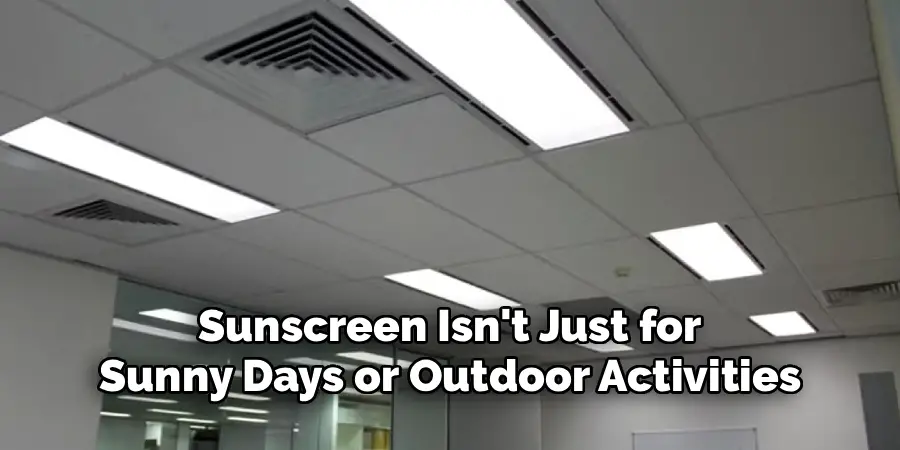
Sunscreen isn’t just for sunny days or outdoor activities. Wearing a broad-spectrum SPF 30 or higher every morning before work creates a protective barrier against both UV-A and UV-B radiation, which fluorescent lighting emits in small but consistent doses. Apply it as the final step in your morning skincare routine, after moisturizer and before any makeup.
Choose a formula that suits your skin type — lightweight, non-comedogenic options work well for oily or combination skin, while hydrating SPF formulas suit drier skin types. If your skin is sensitive, mineral sunscreens containing zinc oxide or titanium dioxide tend to be gentler than chemical alternatives. Getting into the habit of applying SPF daily, regardless of your plans, is one of the most effective protective measures available to anyone who works indoors.
Step 2: Consider Switching To LED Or Diffused Lighting At Your Desk
Standard fluorescent tubes emit more UV radiation than LED alternatives, particularly older T8 and T12 bulbs without UV-filtering coatings. If you have any control over your immediate workspace lighting, switching to LED desk lamps or requesting LED overhead replacements is a practical first step. LEDs produce negligible UV output compared to fluorescent tubes and create a more comfortable working environment overall.
If you can’t change the overhead fixtures, a UV-filtering desk lamp positioned to reduce how much direct fluorescent light falls on your face and arms makes a meaningful difference. Even repositioning your desk so overhead lights don’t shine directly downward onto you reduces cumulative exposure. Understanding how to protect skin from office fluorescent lights often starts with addressing the light source itself rather than only compensating through skincare products.
Step 3: Add A Niacinamide Or Antioxidant Serum To Your Routine
Niacinamide, vitamin C, and other antioxidant serums help neutralize free radical damage caused by UV and blue light exposure. These aren’t a substitute for SPF, but they work alongside it to strengthen the skin’s defenses and reduce visible signs of light-related aging over time. Apply your serum after cleansing and before moisturizer each morning.

Vitamin C serum is particularly well-researched for its ability to brighten skin and reduce hyperpigmentation — both outcomes that become more relevant with cumulative light exposure. Niacinamide supports the skin barrier, reduces redness, and helps even out skin tone. Both are widely available at various price points and suit most skin types. Starting with one and observing how your skin responds is a straightforward way to add protective value to a routine you likely already have.
Step 4: Stay Hydrated To Support Your Skin’s Natural Barrier
Fluorescent lighting contributes to a dry office environment, and dehydrated skin is more vulnerable to irritation and damage from light exposure. When the skin barrier is compromised by dryness, UV and blue light penetrate more easily and cause more pronounced effects. Drinking adequate water throughout the day — at least six to eight glasses — helps maintain the skin’s natural moisture levels and barrier function.
Keeping a hydrating facial mist at your desk is a helpful supplement, particularly in air-conditioned offices where humidity levels tend to be low. A light, non-greasy moisturizer applied in the morning underneath your SPF also locks in hydration and strengthens the barrier before the workday begins. These steps work together to keep your skin in better condition to handle the environmental stresses of a full day at the office.
Step 5: Use UV-Filtering Window Film Or Positioning Strategies
If your desk is near a window, you may be receiving both outdoor UV radiation and indoor fluorescent exposure simultaneously, which compounds the risk. UV-filtering window film applied to office glass blocks up to 99 percent of UV-A radiation while still allowing natural light through. Many commercial buildings use standard glazing that offers limited UV protection despite appearing to block sunlight visibly.

If installing window film isn’t within your control, adjusting your desk position to avoid direct sunlight through unfiltered glass is a practical alternative. Sitting perpendicular to a window rather than directly in front of it reduces the amount of UV radiation your face and arms receive during the day. Addressing both natural and artificial light sources together gives your skin the most comprehensive protection during working hours.
Step 6: Reapply SPF During The Day If Needed
SPF effectiveness decreases over time, particularly if you eat at your desk, touch your face, or spend any part of your day near windows. For most indoor office environments, morning application is sufficient for all-day protection under moderate artificial lighting. However, if you sit directly beneath exposed fluorescent fixtures for hours without any diffusing cover, or if your workspace combines direct window light with overhead fluorescent, midday reapplication adds a useful layer of defense.
SPF setting powders and SPF-infused mists make reapplication easy without disturbing makeup or requiring a full wash-and-reapply routine. A light dusting of SPF powder over your face around lunchtime takes less than thirty seconds and maintains your coverage through the afternoon. Keeping one at your desk removes any friction from the habit, making it easy to maintain consistently regardless of how busy your day gets.
Frequently Asked Questions
Do Fluorescent Lights Actually Emit UV Radiation?
Yes, standard fluorescent bulbs do emit small amounts of UV-A and UV-B radiation. The levels are much lower than direct sunlight, but the cumulative effect of spending eight or more hours daily under these lights adds up significantly over months and years. Older fluorescent tubes and those with cracked or deteriorating coatings tend to emit higher levels than newer or well-maintained fixtures.

Can Fluorescent Light Worsen Skin Conditions Like Rosacea Or Eczema?
For people with photosensitive conditions including rosacea, lupus, and certain forms of eczema, UV exposure from any source — including indoor lighting — can trigger flares or worsen symptoms. If you notice increased redness, irritation, or breakouts that seem to correlate with time spent in artificially lit environments, speaking with a dermatologist about targeted protective strategies is a worthwhile step.
Is LED Office Lighting Safer For Skin Than Fluorescent Lighting?
LED lighting emits negligible UV radiation compared to traditional fluorescent tubes, making it a significantly safer option for skin health. LEDs do emit blue light, which some research suggests may contribute to skin stress at high levels, but the UV exposure difference is substantial. If you have the option to replace fluorescent desk lighting with LED alternatives, it’s a beneficial change for both your skin and your overall eye comfort.
What SPF Level Is Sufficient For Indoor Office Protection?
SPF 30 is generally sufficient for indoor environments where UV exposure from artificial lighting is your primary concern. If your desk is near unfiltered windows or you spend time outdoors during the day, SPF 50 offers additional protection. Consistency matters more than SPF number — an SPF 30 applied every morning provides better protection than an SPF 50 applied sporadically or incompletely.
Are There Specific Skincare Ingredients That Protect Against Blue Light?
Research into blue light protection in skincare is still developing, but several ingredients show promise. Niacinamide, iron oxides found in tinted SPF formulas, and antioxidants like vitamin C and resveratrol all offer some degree of defense against blue light-related skin stress. Tinted mineral sunscreens containing iron oxides are currently one of the most evidence-backed options for combined UV and blue light protection in a single product.
Conclusion
Protecting your skin at work doesn’t require an overhaul of your daily routine — it requires a handful of intentional habits applied consistently. Daily SPF application, antioxidant serums, staying hydrated, and addressing your lighting environment are the core pillars of a reliable indoor protection strategy.
Start with one change today: if you don’t currently wear SPF to the office, add it to your morning routine tomorrow. The rest of the steps build naturally from there. Learning how to protect skin from office fluorescent lights is a small investment of time and attention that pays dividends in healthier, more resilient skin for years to come — and the earlier you start, the more you have to gain.
